
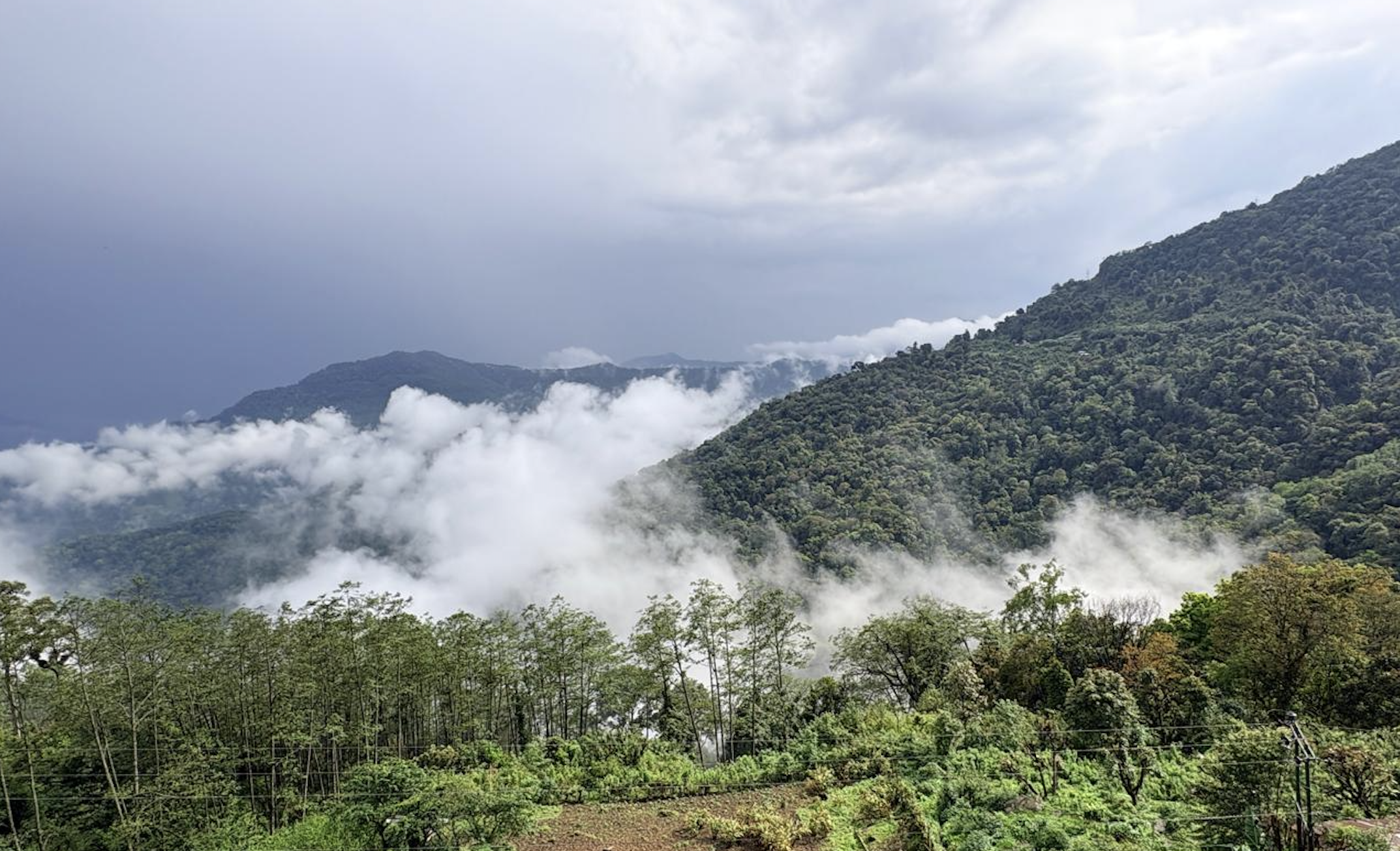
There is a version of the Himalayas that most people never see. Not the sharp, snow-dusted peaks of winter or the golden mornings of October. The version we are talking about is softer, greener, and honestly — more alive. It shows up every year between July and September, and it belongs entirely to the monsoon.
At MoShams, nestled in the hills of Narendra Nagar just above Rishikesh, we take July off every year. Not because the monsoon makes the mountains less beautiful but because it makes them so beautiful that even we need to step back and let the hills breathe. When we return in August, the valley outside our rooms looks like someone turned the saturation all the way up. Every shade of green you can imagine, clouds sitting low in the folds of the mountains, and the kind of quiet that only arrives after weeks of rain.
If you have never considered a monsoon trip to the hills, here is why you should and what you need to know before you go.
The Garhwal Himalayas in monsoon are something else entirely. The dry, dusty landscape of summer disappears almost overnight. Rivers run full and fast. Waterfalls appear on cliff faces that were bare just weeks before. The forests around Narendra Nagar and Rishikesh turn a deep, heavy green that feels almost tropical. On clear mornings, and there are plenty of them between the showers, the peaks emerge from the clouds sharper and more dramatic than at any other time of year.
From Kunjapuri Temple, just a short drive from MoShams, the view of the Himalayan range on a clear monsoon morning is unlike anything you will see in peak season. Kedarnath, Chaukhamba, Shivling — all of them lit up against a washed sky, the valley below still wrapped in mist. It is the kind of view that makes you go very quiet.
The other thing monsoon does is empty the roads. The crowds that fill Rishikesh and the surrounding hills from March to June disappear almost completely. Restaurants have tables. Roads have space. Temples have silence. If what you are looking for is genuine quiet in the hills, monsoon delivers it without any effort on your part.
Monsoon hill travel is rewarding but it asks for a little more planning than a summer or winter trip. Here is what we tell our guests.
Do check road conditions before you travel. The roads between Rishikesh and Narendra Nagar are well-maintained, but landslides can temporarily block routes further into the mountains. Always check updates the morning of any day trip before heading out.
Do carry a good rain jacket, not just an umbrella. In the hills, rain often comes sideways. A waterproof jacket with a hood is far more useful than an umbrella on most days.
Do plan your outdoor activities for the morning. Mornings in monsoon are often clear and surprisingly beautiful. Afternoons bring clouds and showers. Early risers in the hills get rewarded.
Do embrace the slower pace. Monsoon is not the time for a packed itinerary. Some of the best moments come from sitting on a balcony watching the clouds roll in over the valley. Let the weather decide the day.
Don’t attempt river crossings or trek near swollen streams. Rivers in the hills rise very fast during heavy rain. Even crossings that look manageable can become dangerous within minutes. Stick to marked paths and always ask locals before venturing near any water body.
Don’t ignore landslide warnings. Local alerts and news updates are there for a reason. If there is a warning for a route you planned to take, change your plans. The mountains are patient — they will be there another day.
Don’t pack only cotton. Cotton stays wet for a long time in hill humidity. Quick-dry fabrics, a light fleece for evenings, and waterproof shoes will make the trip far more comfortable.
Don’t miss the sunrises. Even in monsoon — especially in monsoon — sunrise in the Himalayan foothills is extraordinary. Set the alarm. It is always worth it.
We close for July every year because even SuperHosts need a holiday, and because we believe in returning with full energy rather than running on empty. When we reopen in August, the property is at its most lush. The valley outside the floor-to-ceiling windows in every room looks like nothing you have seen before. The dip pool sits surrounded by green. The air is clean in a way that cities simply cannot match.
August through November is some of the finest time to stay in the Uttarakhand hills, the monsoon begins to ease, the light returns, and the landscape carries all that green into the cooler months.
Bookings for August onwards are now open. Book direct at www.MoShams.in for the best rates and a truly personalised stay.
MoShams is a boutique slow-holiday retreat in Narendra Nagar, Uttarakhand, 30 minutes from Rishikesh and 40 minutes from Dehradun airport.

